
GAMCA Medical Checkup Rules 2026: Wafid Slip, Approved Centers, Test List & Fit Report
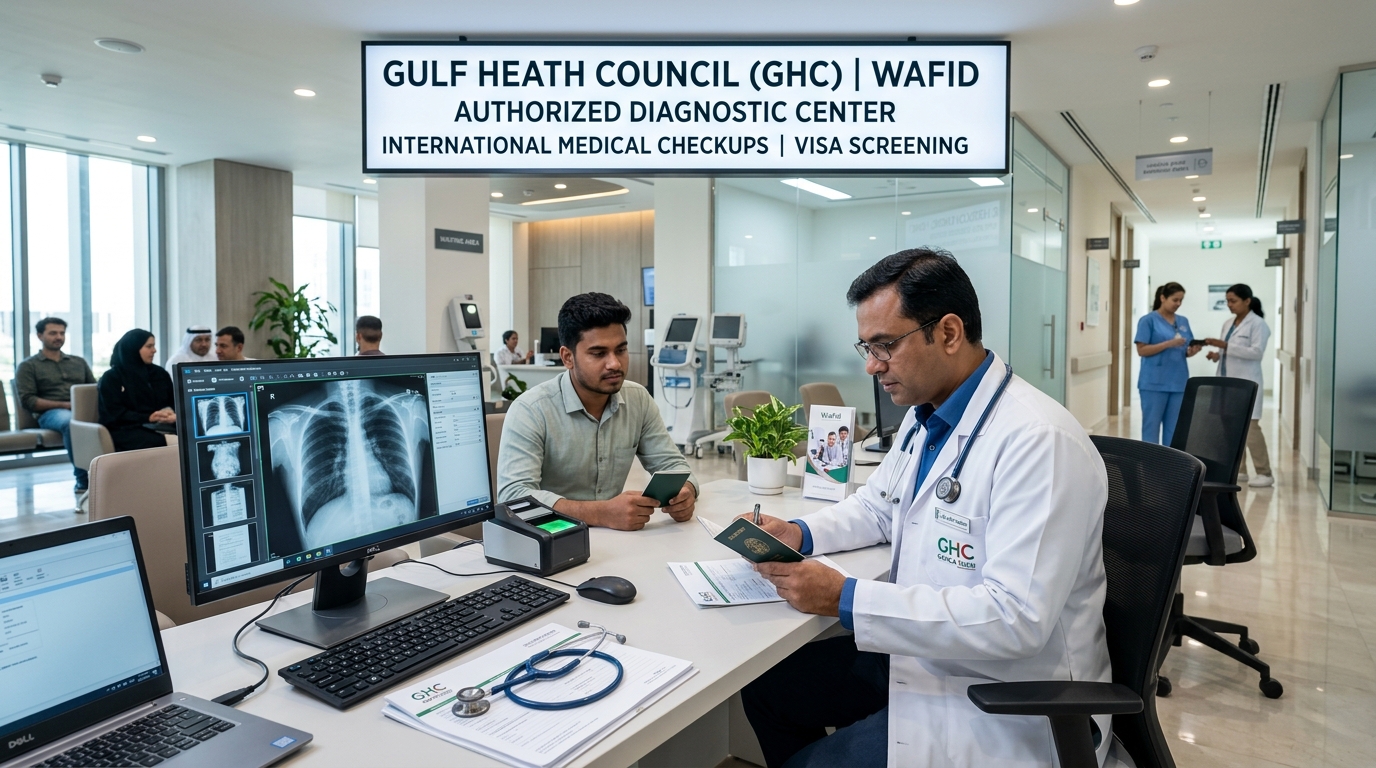
Every outbound Bangladeshi citizen traveling to the 6 Gulf Cooperation Council (GCC) member states—Saudi Arabia, Kuwait, Qatar, Oman, UAE, and Bahrain—on a new employment, residency, or long-term visa must undergo a mandatory medical screening through the Gulf Health Council's Wafid electronic portal (wafid.com). Medical tests must be conducted exclusively at randomly allocated GAMCA-accredited panel clinics.
📋 5 Core Modules in This Master Guide
- Module 1: Wafid Registration & Slip Generation (Queries 01–06): $10 online registration fee, 30-day slip validity, required documents, and anti-fraud center allocation.
- Module 2: Complete Medical Tests & Clinical Breakdown (Queries 07–12): Blood tests (HIV, Hep B/C, VDRL), urine screening, digital chest X-ray for TB scars, physical exams, and pregnancy tests.
- Module 3: Top Unfit Causes & Preparation (Queries 13–18): Top 10 unfit reasons, pre-medical diet, blood pressure control, treating past pneumonia scars, and pre-testing.
- Module 4: Online Medical Report Check & Medical Ban Management (Queries 19–24): Checking report status via passport number, FIT vs UNFIT vs HELD-UP, 6-month to 2-year bans, and legal appeals.
- Module 5: Country Rules, BMET Smart Card & Post-Arrival (Queries 25–30): Saudi, Kuwait, Qatar, Oman, UAE, Bahrain rules, 60-day certificate validity, and post-arrival Iqama medicals.
Cluster 1: Wafid Portal Registration & Medical Slip Generation
01. What is GAMCA / Wafid & Why is it Mandatory for Gulf Migration?
GAMCA (GCC Approved Medical Centers Association), officially renamed and integrated as Wafid under the Gulf Health Council, is an automated regulatory framework. Its mission is to rigorously screen foreign migrant labor before departure, preventing the cross-border transmission of serious infectious, chronic, and communicable diseases into the six Arabian Gulf nations. Without an official electronic 'FIT' clearance on the central Wafid server, no embassy will stamp an employment visa, and the Bureau of Manpower, Employment and Training (BMET) will refuse immigration clearance.
02. How to Generate a Wafid Medical Appointment Slip Online
The registration is completed entirely online via the official portal https://wafid.com. Navigate to 'Book an Appointment', select your nationality as Bangladeshi, select your target destination country (Saudi Arabia, Kuwait, Qatar, Oman, UAE, or Bahrain), and choose your preferred medical examination city (Dhaka, Chittagong, or Sylhet). Enter your exact 9-character passport number, full legal name as written in your passport, date of birth, marital status, and intended profession. Once the $10 USD fee is processed, an official PDF slip containing an encrypted two-dimensional QR code and the name of your allocated diagnostic clinic will be generated.
03. Online Registration Fee ($10 USD) & In-Clinic Medical Charges
The Wafid electronic platform charges a mandatory global fee of exactly $10.00 USD (plus banking gateway charges), which must be paid online using an international credit card, debit card, or dual-currency card. In addition, when you attend your allocated medical clinic in Bangladesh, you must pay the standard physical clinical and laboratory examination fee in local currency. In 2026, the clinical fee ranges between 8,500 BDT and 11,500 BDT depending on the destination country (Saudi Arabia and Kuwait require additional hormonal and specialized infectious disease testing).
04. Validity Period of a Wafid Appointment Slip
An issued Wafid appointment slip remains valid for exactly 30 calendar days from the moment of successful payment and generation. You can visit your allocated clinic on any working day (Sunday through Thursday, 8:30 AM to 1:00 PM) within this 30-day window. If you fail to visit the medical center within 30 days due to personal delays or illness, the appointment slip expires automatically from the central database, requiring a fresh $10 USD payment to generate a new slip.
05. Required Documents to Bring to the Medical Center
When reporting to your assigned GAMCA medical center in Dhaka, Chittagong, or Sylhet, you must carry: (1) Original Bangladesh Machine Readable Passport (MRP) or Electronic Passport (e-Passport) valid for a minimum of 6 months, (2) Two clear photocopies of the bio-data page, (3) The printed color Wafid appointment slip showing the clear barcode and assigned center name, (4) Copy of your official Gulf visa or electronic calling visa approval document, and (5) 4 to 6 copies of recent passport-sized photographs taken against a clean white background without glasses or headwear obscuring facial features.
06. Can You Choose or Change Your Allocated Medical Center?
No. The Wafid portal operates on a strictly randomized automated distribution algorithm. Neither the candidate, the recruiting agency, nor any third-party middleman has the ability to select, transfer, or switch the allocated diagnostic clinic. This centralized automated randomizer was specifically implemented by the GCC Health Council to eradicate fraudulent collusion, financial bribery, and unethical influence between recruiting agents and private clinics. Any broker claiming they can switch your clinic is attempting fraud.
Cluster 2: Complete Medical Tests & Clinical Examination Procedures
07. Blood Testing for Infectious Diseases (HIV, Hepatitis B/C, Syphilis, VDRL)
The serological blood screening is the most critical and scrutinized element of the GAMCA medical process. Certified phlebotomists draw 10ml to 15ml of venous blood from your arm to run automated, multi-tiered laboratory assays. Tests include: (1) HIV 1 & 2 antibody screening via 4th-generation ELISA and chemiluminescence, (2) Hepatitis B surface antigen (HBsAg), (3) Hepatitis C virus antibodies (Anti-HCV), (4) Syphilis treponemal screening via VDRL and TPHA confirmatory assays, and (5) Peripheral blood smear examination for malaria parasites and microfilaria. In 2026, finding positive reactive markers for HIV, Hepatitis B, or Hepatitis C causes an immediate and irreversible UNFIT declaration across the entire Gulf database.
08. Urine Analysis: Sugar, Albumin, Kidney Function & Illicit Drugs
Candidates must submit a freshly voided midstream urine sample in a sterile diagnostic cup inside the clinic. Automated dipstick and microscopic sediment analyses evaluate: (1) Urinary glucose to detect undiagnosed or uncontrolled diabetes mellitus, (2) Albumin and protein levels indicating glomerulonephritis, diabetic nephropathy, or chronic renal disease, (3) Red blood cells (hematuria) and pus cells signifying urinary tract infections or kidney stones, and (4) Comprehensive toxicology screening for narcotic substances, including cannabis (THC), amphetamines, and opiates. Candidates with trace protein or minor pus cells are often marked HELD-UP until antibiotic clearance is completed.
09. Digital Chest X-Ray: Screening for Tuberculosis (TB) Scars
A high-resolution posterior-anterior (PA) digital chest radiograph is taken inside a shielded lead booth. Radiologists inspect the lung fields, pleura, costophrenic angles, and mediastinum. The GCC Health Council enforces extreme zero-tolerance policies regarding pulmonary tuberculosis. The digital X-ray is analyzed for: active tuberculosis infiltrates, cavitary lesions, apical fibrosis, pleural thickening, calcified Ghon complexes, or residual parenchymal scars from childhood pneumonia or pleurisy. Even a tiny, completely inactive and cured fibrous scar from an infection that occurred ten years ago can trigger an automated UNFIT status under strict Gulf immigration laws.
10. Physical Examination: Blood Pressure, Visual Acuity & Color Blindness
A general physician conducts a comprehensive physical evaluation. Resting blood pressure must not exceed 140/90 mmHg; candidates exhibiting elevated readings due to anxiety or rushing are instructed to sit quietly in a recovery room for 30 minutes before re-checking. Vision is evaluated using standard Snellen charts at 6 meters (distance visual acuity must be at least 6/6 or 6/9, corrected with prescription eyeglasses). Color perception is evaluated using Ishihara pseudoisochromatic plates; failure to detect color plates results in disqualification for commercial driving, electrical, painting, and aviation technician visas.
11. Dermatological & Venereal Disease Inspection (Scars & Tattoos)
Candidates undergo a private dermatological inspection in an examination room. Doctors check for active open wounds, chronic psoriasis, leprosy skin patches, keloids, secondary syphilis rashes, and genital lesions or ulcers. Surgical scars from appendectomy, gall bladder removal, hernia repairs, or bone fractures are documented as benign surgical history and do not cause disqualification. Body tattoos are inspected to ensure they are fully healed and free from secondary bacterial infections or transmissible viral lesions.
12. Pregnancy Testing & Special Protocols for Female Domestic Workers
Female candidates applying for domestic employment, hospitality, nursing, or manufacturing jobs undergo mandatory beta-hCG pregnancy testing via serum and urine. Under Gulf labor laws, pregnant foreign workers cannot be granted work residency visas; a positive test causes an immediate UNFIT classification. In addition, female applicants undergo complete blood counts (CBC) to screen for severe iron deficiency anemia (hemoglobin must be above 10.0 g/dL).
Cluster 3: Primary Causes of UNFIT Status & Essential Pre-Test Preparation
13. Top 10 Medical Reasons for Being Declared UNFIT
According to historical diagnostic statistics from GCC-approved clinics in Bangladesh, over 94% of all UNFIT determinations stem from ten primary clinical findings:
- 1. Hepatitis B Surface Antigen Positive (HBsAg): Accounts for nearly 35% of all medical failures.
- 2. Pulmonary Tuberculosis Scars & Infiltrates on Chest X-Ray: Accounts for approximately 30% of failures.
- 3. Hepatitis C Antibodies Positive (Anti-HCV): Accounts for 12% of disqualifications.
- 4. HIV / AIDS 1 & 2 Infection: Permanent global exclusion.
- 5. Severe Uncontrolled Hypertension: Systolic blood pressure > 150 mmHg or diastolic > 95 mmHg.
- 6. Advanced Diabetes Mellitus: Fasting plasma glucose > 140 mg/dL or persistent heavy glucosuria.
- 7. Syphilis / Venereal Infection: Positive reactive VDRL and TPHA titers.
- 8. Chronic Renal Failure: Serum creatinine > 1.5 mg/dL accompanied by heavy albuminuria.
- 9. Severe Clinical Psychiatric Illness or Epilepsy: Neurological and psychological unfitness.
- 10. Total Color Blindness or Extreme Visual Impairment: Disqualification for transport and technical visas.
14. Pre-Test Health Preparation: Diet, Sleep, Hydration & Fasting
Achieving optimal blood and urine parameters requires disciplined preparation in the 72 hours preceding your clinic appointment: (1) Fast for 10 to 12 hours overnight before morning blood sampling; do not eat breakfast, though drinking plain water is actively encouraged, (2) Consume 2.5 to 3 liters of pure drinking water throughout the day prior to flush urinary sediments and lower concentrated specific gravity, (3) Avoid high-sodium curries, red meat, and oily fast foods for 3 days to prevent transient spikes in liver enzymes (SGPT/ALT) and blood pressure, and (4) Ensure 8 hours of uninterrupted nocturnal sleep to prevent stress-induced tachycardia.
15. Managing Chest X-Ray Scars from Past Pneumonia or Bronchitis
If you have a personal medical history of childhood pneumonia, severe bronchitis, or pleural effusion, do not take the GAMCA medical test blindly. Visit a reputable local diagnostic imaging center (such as Popular Diagnostic or Ibn Sina) and pay for a private digital chest radiograph. Have a senior consultant pulmonologist review the film. If old fibrous bands or calcified spots exist, have the specialist issue a signed medical certificate affirming that the lungs are clinically clear of active disease and that the findings represent inactive, non-communicable scar tissue. Bring this certificate along with historical X-ray films to your GAMCA appointment.
16. Can Hepatitis B or C Positive Candidates Migrate to the Gulf?
No. The Gulf Health Council maintains an uncompromising, absolute statutory ban against individuals who test positive for Hepatitis B surface antigen or Hepatitis C antibodies. Even if a candidate undergoes successful antiviral drug therapy (such as Sofosbuvir/Velpatasvir for Hep C) that eradicates circulating viral RNA to undetectable levels, blood antibody markers remain detectable for life. The automated ELISA screening used by GAMCA clinics detects these antibodies and immediately issues an UNFIT status. Candidates who test positive should avoid wasting money on Gulf visas and consider employment destinations in Europe or Southeast Asia that do not mandate Hepatitis antibody bans.
17. How to Stabilize Diabetes and High Blood Pressure Before Testing
Candidates with mild hypertension or border-line blood glucose must take prescribed anti-hypertensive or oral hypoglycemic medications regularly under physician supervision for at least two weeks before the test date. On the morning of your exam, take your prescribed blood pressure medication with a sip of water. Strictly refrain from smoking cigarettes, chewing betel leaf (paan), or consuming caffeinated black tea or energy drinks on the morning of testing, as nicotine and caffeine dramatically constrict peripheral blood vessels and spike systolic blood pressure readings.
18. The Vital Importance of Taking a Local Pre-Medical Test First
The single most vital recommendation for any Bangladeshi outbound worker is to take a confidential "Pre-Medical Test" at a local private hospital 7 to 10 days before generating a Wafid slip. A local screening panel costing approximately 2,500 to 3,500 BDT covers: complete blood count, HBsAg, Anti-HCV, VDRL, fasting blood sugar, serum creatinine, urine routine examination, and digital chest X-ray. If an asymptomatic, treatable issue is discovered—such as a mild urinary tract infection, elevated blood sugar, or transient high blood pressure—you can treat it completely with antibiotics and lifestyle adjustments before your official passport number is entered into the Wafid system.
Cluster 4: Online Medical Report Check, Statuses & Medical Bans
19. How to Check GAMCA Medical Report Online via Passport Number
Checking your official medical report takes under 60 seconds from any smartphone or computer. Visit the official verification portal: https://wafid.com/medical-status-search/. Enter your 9-character Bangladesh passport number, select your nationality as Bangladeshi from the dropdown menu, enter the automated mathematical captcha code displayed on screen, and click 'Search'. Your full electronic profile will appear, displaying your applicant photograph, allocated clinic name, test date, and final certified fitness status.
20. Understanding "FIT", "UNFIT", and "HELD-UP" Statuses
The Wafid platform displays one of three definitive clinical results:
- FIT (Green Status): You have successfully met all diagnostic criteria. Your electronic fitness certificate is instantly transmitted to the destination country's Ministry of Foreign Affairs (MOFA) database for visa issuance.
- HELD-UP (Yellow Status): Your case is temporarily delayed. This occurs when a laboratory test is inconclusive (e.g. border-line blood pressure, trace urinary protein, or blood samples requiring secondary confirmatory testing). You must report back to the clinic for repeat evaluation.
- UNFIT (Red Status): You have been permanently disqualified from Gulf migration due to active communicable infection, chronic organ failure, or pulmonary scarring.
21. How Many Days After Examination is the Final Report Published?
Under standard operating procedures, clean medical reports where all laboratory and radiological values are normal are published online within 24 to 48 hours following examination. If a candidate's blood sample requires secondary dilution assays, automated viral load checks, or if a chest radiograph requires senior multi-consultant review, publication may take 72 to 96 hours.
22. Duration of a Medical Ban Following an UNFIT Declaration
When a clinic registers an official UNFIT report on the Wafid platform, an automated electronic block is linked to your passport number across all six GCC embassies: (1) For treatable conditions (such as severe uncontrolled hypertension or non-infectious findings), the electronic lock lasts for 6 months, after which a candidate may generate a new slip, and (2) For Hepatitis B, Hepatitis C, HIV, or active pulmonary tuberculosis, the medical ban is enforced for 2 years or permanently for life across all GCC member states.
23. Legal Procedures for Appealing a False UNFIT Declaration
If you believe an UNFIT declaration resulted from laboratory error, cross-contamination, or specimen mix-up, you have the legal right to appeal: (1) Immediately undergo independent confirmatory testing at a premier government tertiary hospital (e.g. BSMMU / PG Hospital, IEDCR, or Dhaka Medical College Hospital), (2) Obtain an official clinical report signed by the head of department, and (3) Submit a formal written grievance with your original lab reports to the GCC Health Council representation office and the Ministry of Expatriates' Welfare in Dhaka. If justified, authorities will authorize a supervised re-examination.
24. Identifying Fake Medical Certificates & Official QR Verification
Unscrupulous brokers often fabricate fake "FIT" paper certificates using graphic editing software to defraud migrant workers. Genuine certificates can be verified instantly: every authentic Wafid report features a secure, encrypted QR barcode. Scanning this barcode with any smartphone camera must redirect your browser directly to an official https://wafid.com server URL displaying your authentic photograph, passport number, and matching laboratory metrics. If scanning the QR code leads to a generic website, third-party domain, or fails to open, the document is an illegal forgery.
Cluster 5: Country-Specific Protocols, BMET Clearance & Post-Arrival
25. Saudi Arabia GAMCA Medical & Tasheer Biometric Linkage
For Saudi Arabia work employment visas, the medical center transmits your certified FIT status directly to the Saudi Ministry of Foreign Affairs (MOFA / Enjaz) cloud server. When you attend your mandatory biometric appointment at a Saudi Tasheer (VFS) Visa Service Center in Dhaka or Chittagong, the visa officer's terminal electronically retrieves your Wafid clearance. If your medical record is not yet visible in the system, Tasheer will refuse your biometric submission.
26. Special Medical Protocols for Kuwait and Qatar Outbound Workers
Kuwait enforces the most stringent medical protocols among Gulf nations. After obtaining a FIT report, candidates must have their paper certificate attested by the Embassy of the State of Kuwait in Dhaka before visa issuance. Conversely, Qatar operates dedicated Qatar Visa Centers (QVC) in Dhaka and Sylhet, which integrate fingerprint biometrics, employment contract execution, and complete medical examinations under a unified governmental process.
27. Health Clearance Standards for Oman, UAE & Bahrain
The Sultanate of Oman and the Kingdom of Bahrain mandate full Wafid electronic clearance prior to issuing resident work permits. The United Arab Emirates (UAE) requires Wafid clearance primarily for female domestic workers, heavy vehicle drivers, and food handlers; general white-collar and commercial visit visas can be processed without pre-departure medicals, with health screening completed upon arrival in Dubai or Abu Dhabi.
28. Official Validity Period of a GAMCA Fit Certificate (60 Days)
A certified GAMCA Medical Fit Certificate is legally valid for exactly 60 calendar days (2 months) from the date of clinic issuance. Within this 60-day timeframe, your recruiting agency or employer must complete visa stamping, BMET manpower clearance, and airline flight booking. If visa processing takes longer than 60 days, your medical certificate automatically lapses, and you must generate a new Wafid slip and undergo the complete examination process again.
29. Linking Medical Fitness to the BMET Manpower Smart Card
The Bureau of Manpower, Employment and Training (BMET) automated recruitment portal (Ami Probashi) is electronically linked to the central Wafid database. Once your clinic uploads a FIT result, the BMET system automatically validates your medical clearance. This allows your recruiting agency to submit for final manpower clearance and obtain the digitized BMET Smart Card required to exit Hazrat Shahjalal International Airport.
30. Post-Arrival Medical Checkup in Gulf Countries for Iqama Issuance
Passing your GAMCA test in Bangladesh does not exempt you from medical screening abroad. Within 30 to 90 days of arriving in your host country, your sponsor or employer must take you to an authorized government hospital for a mandatory post-arrival medical checkup (e.g. Iqama medical in Saudi Arabia, Medical Commission in Qatar, or DHA screening in the UAE). Blood is re-tested for infectious diseases, and chest X-rays are repeated. If a worker tests positive abroad, they are immediately detained, placed in deportation centers, and repatriated to Bangladesh at their own expense.
Real Expatriate Case Studies: Overcoming GAMCA Medical Challenges
Case 1: Tariq's High Blood Pressure Scare
Tariq, an experienced driver from Comilla, rushed to his Gulshan clinic after battling 2 hours of intense Dhaka traffic. When the doctor measured his blood pressure, it spiked to 165/102 mmHg due to anxiety and exhaustion. His status was placed as 'HELD-UP'. Following medical advice, he rested in an air-conditioned quiet room, drank 500ml of water, and practiced deep breathing for 3 hours. When re-tested in the afternoon, his blood pressure dropped to 124/82 mmHg, and his online status was successfully updated to 'FIT' that evening.
Case 2: Sohel's Pre-Medical Discovery
Before paying for his official Wafid appointment for a Kuwait construction visa, Sohel invested 3,000 BDT in a confidential local pre-medical test in Sylhet. The lab detected high urinary sugar (150 mg/dL) and mild proteinuria. Working with an endocrinologist, he completely eliminated sugar, refined rice, and sweetened tea for two weeks, took prescribed medication, and walked 5 kilometers daily. When his follow-up local tests cleared, he booked his official Wafid appointment and passed with a 100% FIT certificate on the first attempt.
Authorized GAMCA Medical Center Clusters in Dhaka, Chittagong & Sylhet
Dhaka Division Clusters
Concentrated in Banani (Road 11, Kemal Ataturk Avenue), Gulshan-2, Mohakhali Commercial Area, Panthapath, and Purana Paltan, housing over 75 accredited diagnostic laboratories.
Chittagong Division Clusters
Located primarily along GEC Circle, Agrabad Commercial Area, Nasirabad, and Mehdibag road networks, serving candidates from Chittagong, Cox's Bazar, and Feni.
Sylhet Division Clusters
Situated around Zindabazar, Subidbazar, VIP Road, and Amberkhana, serving outbound workers from Sylhet, Moulvibazar, Habiganj, and Sunamganj.
10 Golden Rules for Achieving 100% Fit Status in GAMCA Medicals
- Always Take a Local Pre-Medical Test: Invest 2,500 to 3,500 BDT locally before registering on the official Wafid portal to identify and treat asymptomatic health issues in advance.
- Fast Strictly for 10 to 12 Hours: Do not consume food or sugary drinks after 10:00 PM on the night before your morning examination; drinking pure plain water is permitted.
- Hydrate Abundantly with Pure Water: Drink at least 2.5 liters of water the day before to cleanse your urinary tract, reduce concentrated sediments, and lower risk of trace protein findings.
- Ensure 8 Hours of Restful Sleep: Sleep deprivation, exhaustion, and anxiety directly trigger elevated blood pressure readings and resting heart rates.
- Eliminate Salty, Fatty & Red Meats: Avoid beef, mutton, oily curries, and high-salt snacks for 72 hours prior to testing to keep liver enzymes (SGPT/SGOT) and blood pressure stable.
- Zero Smoking or Caffeine on Exam Day: Do not smoke cigarettes, vape, chew paan (betel leaf), or drink strong tea/coffee on the morning of testing to prevent temporary vascular constriction.
- Wear Loose, Short-Sleeved Clothing: Wear a comfortable, light cotton shirt that allows easy blood pressure cuff application and quick arm blood sampling.
- Carry Clean, Authentic Documents: Bring your original passport, 4 clear color photographs with white background, and your printed color Wafid slip with a pristine, uncreased QR barcode.
- Maintain Composure During Blood Sampling: Relax your arm muscles and breathe slowly; anxiety-induced vasovagal responses can cause fainting or dizzy spells.
- Verify Name and Passport Number On-Site: Before exiting the diagnostic clinic, verify that the staff entered your name, date of birth, and passport number with 100% precision.
🔗 Related Essential Pre-Departure Guides:
❓ Frequently Asked Questions (GAMCA Medical Top 10 FAQ)
1. Do travelers visiting Saudi Arabia on Umrah or tourist visit visas require a GAMCA medical test? ▼
No. The GAMCA (Wafid) medical examination is strictly mandatory only for long-term work employment visas, permanent residency permits, and student visas for Gulf Cooperation Council (GCC) nations. Tourist, Umrah, family visit, and business conference visa holders are completely exempt.
2. Does having tattoos or skin scars result in being declared UNFIT in a GAMCA medical checkup? ▼
Visible tattoos or non-infectious cosmetic scars do not automatically cause an UNFIT result. However, medical doctors will examine fresh tattoos or puncture scars for signs of acute skin infections, keloids, or blood-borne transmissions (Hepatitis B, C, or HIV).
3. Can a candidate pass GAMCA medicals if they have mild hearing loss or a perforated eardrum? ▼
Mild hearing impairment usually passes general labor categories. However, for specialized professions (heavy equipment drivers, security personnel, crane operators), severe hearing loss or chronic draining ear infections (otitis media) can result in a temporary HELD-UP or UNFIT status.
4. What should you do if you feel dizzy or faint during blood sampling at the medical center? ▼
Inform the phlebotomist immediately before needle insertion. They will allow you to lie flat on an examination couch. Vasovagal dizziness is completely psychological and does not affect your laboratory blood test results.
5. What should a candidate do if an unscrupulous middleman or medical center staff demands a bribe to make them 'FIT'? ▼
Never pay bribes. GAMCA center results are directly uploaded to the encrypted Saudi Wafid central database in Riyadh with barcode tracking. Middlemen cannot alter laboratory blood or X-ray data; attempting bribery can lead to police arrest and permanent blacklisting.
6. What happens if a GAMCA Medical Fit Certificate expires before visa stamping is completed? ▼
A GAMCA Fit Certificate is legally valid for exactly 60 days (2 months) from the date of issuance. If your visa or BMET smart card is not processed within 60 days, the certificate expires, and you must generate a new Wafid slip and undergo the complete medical checkup again.
7. What should you do if your fingerprints or biometric scan fail to match during medical checkup? ▼
Wash your hands thoroughly with mild soap and moisturize dry fingertips. If scanner errors persist due to occupational wear, center supervisors will use secondary optical scanners or verify identity via high-resolution facial recognition against your passport chip.
8. Do elevated uric acid, creatinine, or cholesterol levels result in an UNFIT declaration? ▼
Mildly elevated cholesterol or uric acid does not cause an immediate UNFIT result. However, significantly elevated serum creatinine indicates chronic renal impairment, which can lead to a HELD-UP status pending nephrology re-evaluation.
9. What type of clothing should a candidate wear when visiting the GAMCA medical center? ▼
Wear a comfortable, loose-fitting cotton short-sleeved shirt without metallic zippers or buttons, making blood pressure measurement, arm blood draws, and chest X-rays quick and effortless.
10. Do Saudi Tasheer (VFS) visa centers require a separate medical fitness certificate? ▼
No. The Saudi Ministry of Foreign Affairs (MOFA) and Tasheer visa centers access your verified GAMCA medical fitness record electronically through your passport number linked to the central Wafid platform.